

Pair of Régence gilt-bronze mounted Chinese powder-blue porcelain
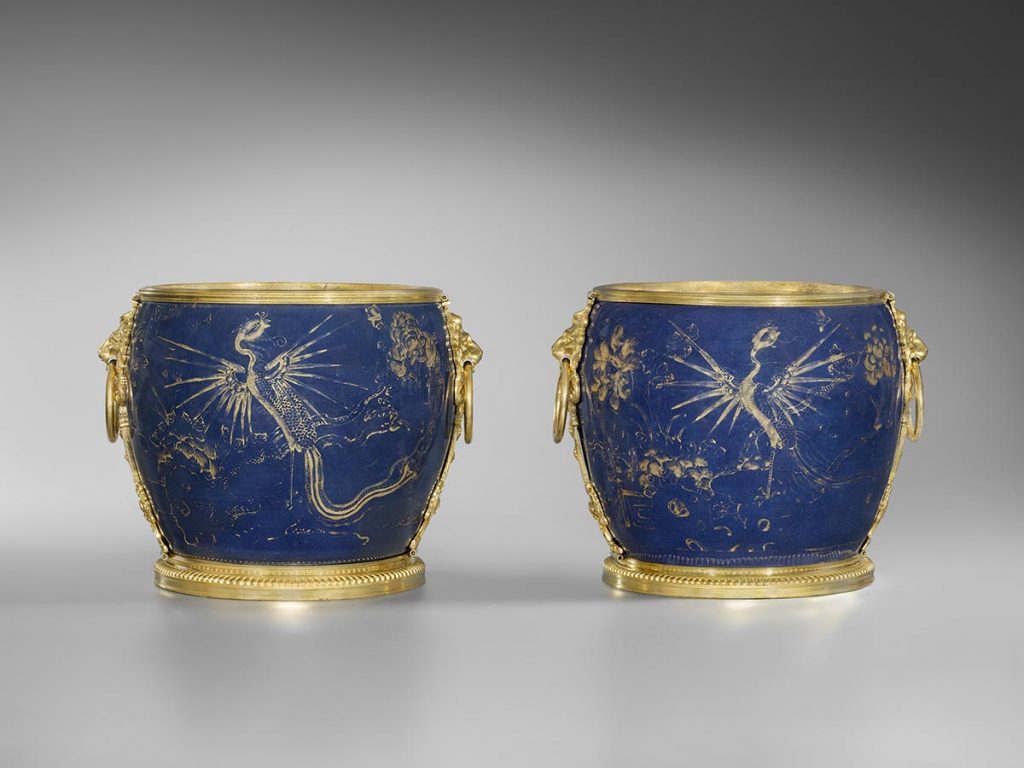
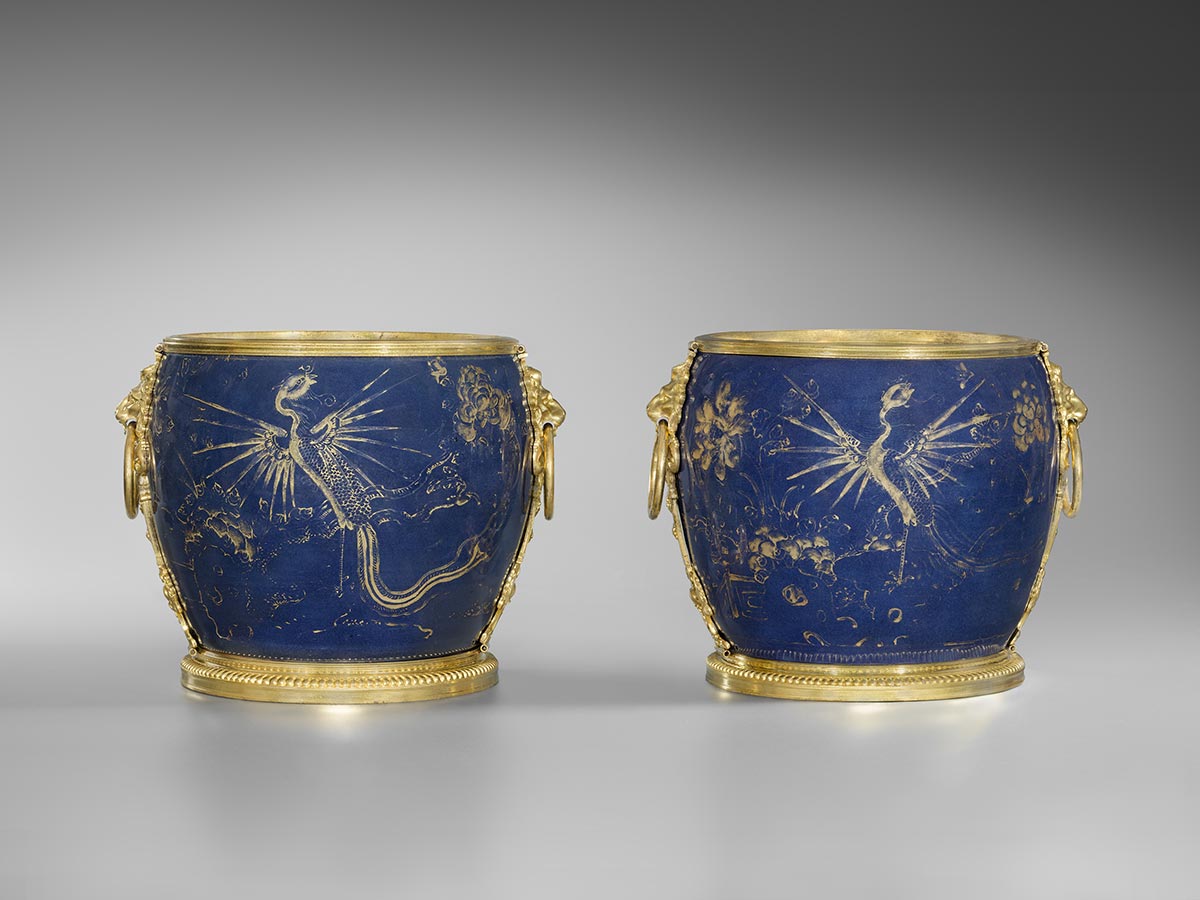
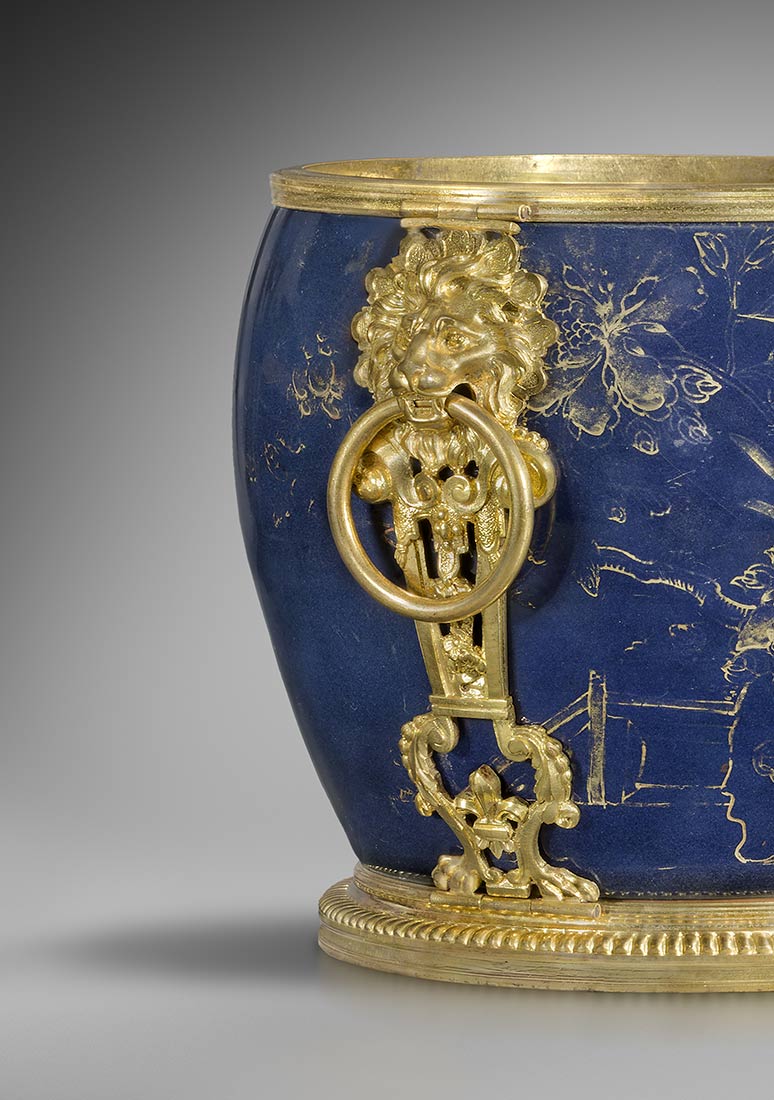
Pair of Régence gilt-bronze mounted Chinese powder-blue porcelain cachepots – Circa 1715-1723
The Porcelain early 18th Century
Height: 19.5 cm. (7 ¾ in.) Width: 25cm. (10 in.)
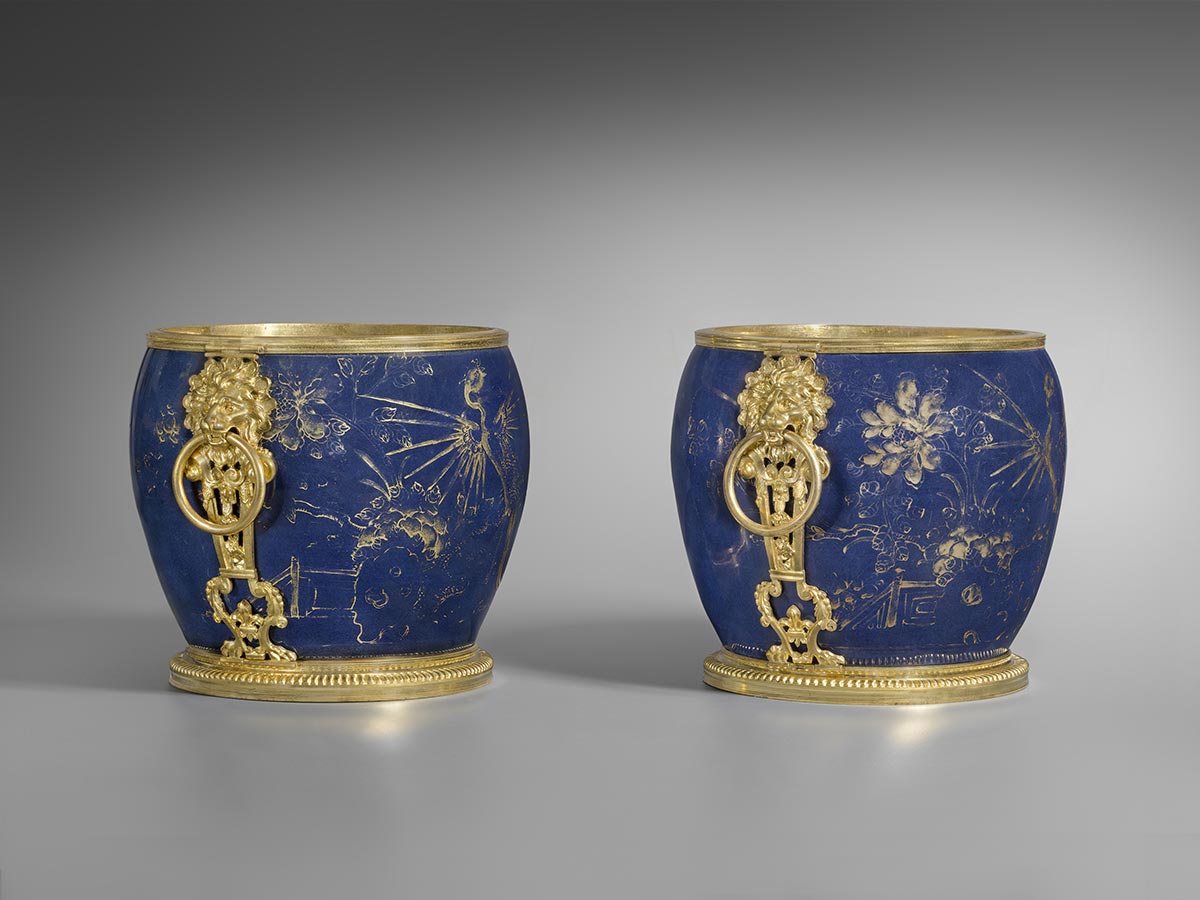
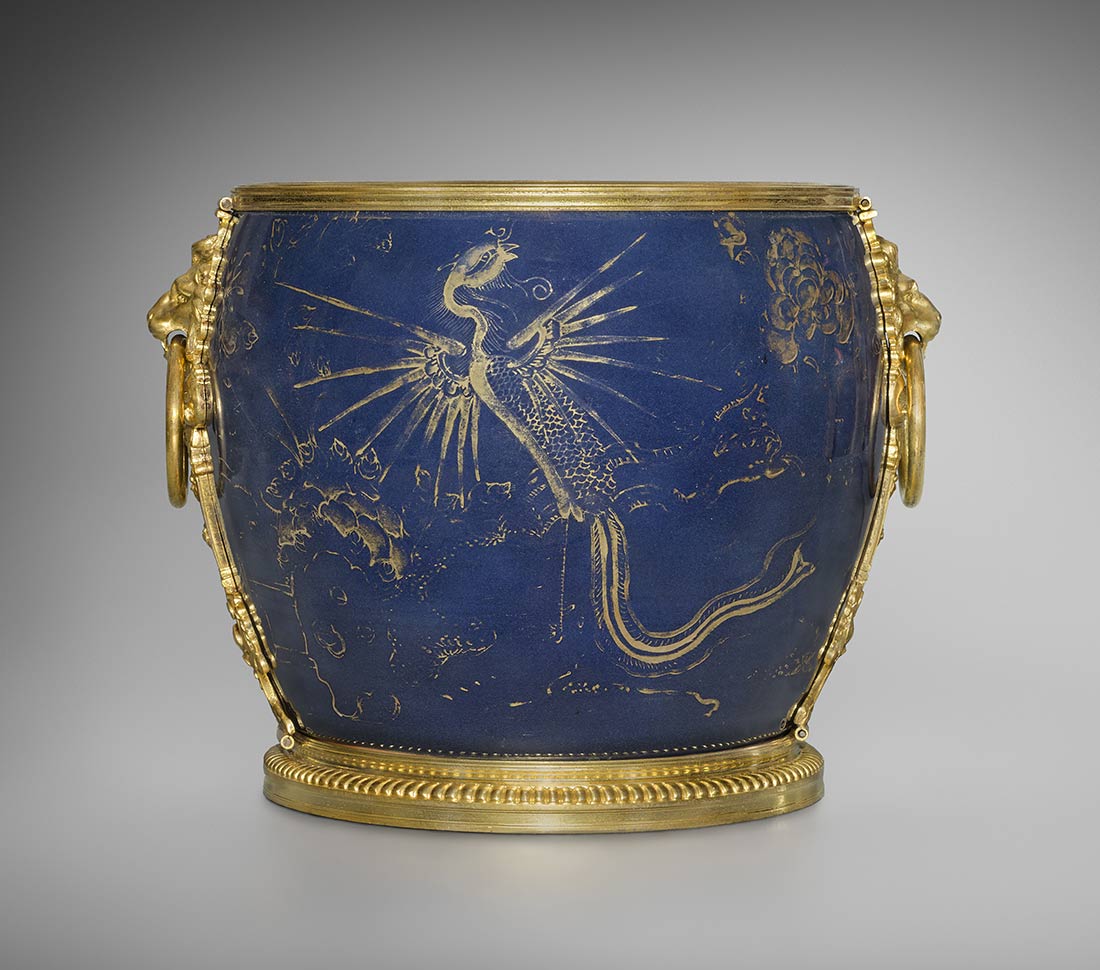
The oviform bodies gilt with stylised phoenix among flowering shrubs issuing from rockwork and fences, the mounts with cast lion’s mask and ring handles between reeded and gadrooned rims
Provenance
Nathaniel Mayer ‘Natty’ Rothschild (1840-1915) 1st Lord Rothschild, Tring Park, Hertfordshire by 1915
By descent to his grandson, Victor Rothschild, 3rd Baron Rothschild (1910-1990)
Thence by family descent
Inventoried
Inventory and estate valuation for Tring Park. 1915. London, Rothschild Archives, RAL 000/848/19/2.
Exhibited
Formerly on loan at Waddesdon Manor, Buckinghamshire
Comparative Literature
- Kjellberg, Objets montés du Moyen Age à nos jours, Paris, 2000, p. 34 (ill.)
Rothschild Provenance
These cache pots were acquired sometime in the last quarter of the 19th Century by Nathaniel Mayer, the 1st Lord Rothschild for his country estate, Tring Park, in Hertfordshire. They are listed in the inventory taken after his death in 1915 in a Guest Bedroom at Tring described as A pair of Oriental powder blue jardinieres, with ormolu mounts, 7 ½ “ high.
Tring Park was bought by Lionel de Rothschild (1808-1879) in 1872 as a wedding present for Nathaniel and his wife. It is best known for the extraordinary zoo that their son, Walter, created on the estate. It passed to Walter’s nephew, Victor, 3rd Lord Rothschild, who broke up it and sold it in 1938 at the same time as he sold off the contents of the family’s London house at 148 Picadilly. The cache pots passed to Victor’s eldest son, Nathaniel Charles Jacob, 4th Lord Rothschild (1936-2024), who placed them on long-term loan at Waddesdon Manor.
Design of the Mounts
The cache pots illustrate the ingenuity of French craftsmen in adapting Asian works to suit European tastes and usage in the early 18th Century.
They have been created out of the lower sections of baluster-form Chinese powder blue-glazed porcelain vases finely decorated with gilt phoenixes. The Parisian bronzier has mounted them with gilt bronze rims and gadrooned bases joined by pierced strapwork handles fitted with lion’s mask and ring handles and fleurs-de-lys.
The combination of lion’s heads and fleur-de-lys is rare on works from this period: two further pairs of cache-pots have identical mounts, indicating a common source, likely a marchand-mercier:
- one sold from the collection of Jaime Ortiz-Patiño, Sotheby’s New York, 25 April 1998, lot 234 for $178,000
- another sold Sotheby’s New York, 20 November 1993, lot 90
A third example in blue and white porcelain is illustrated in Kjellberg, op. cit., p. 34.