

A Gout Grec Vase Clock
pendule ancienne
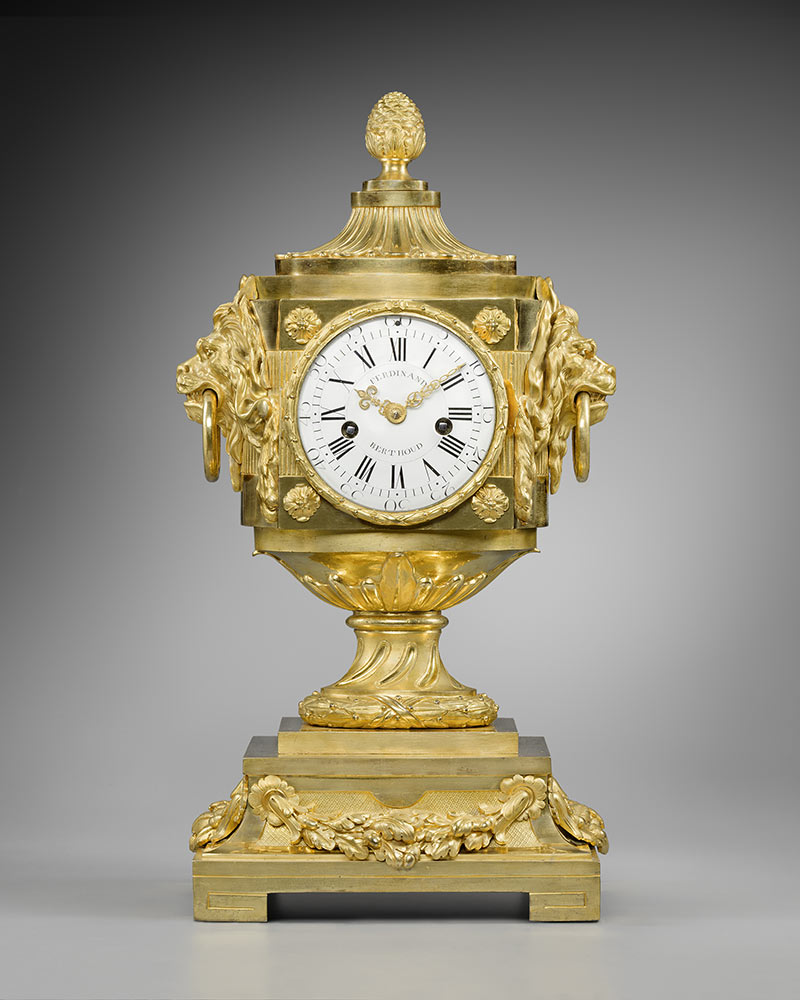
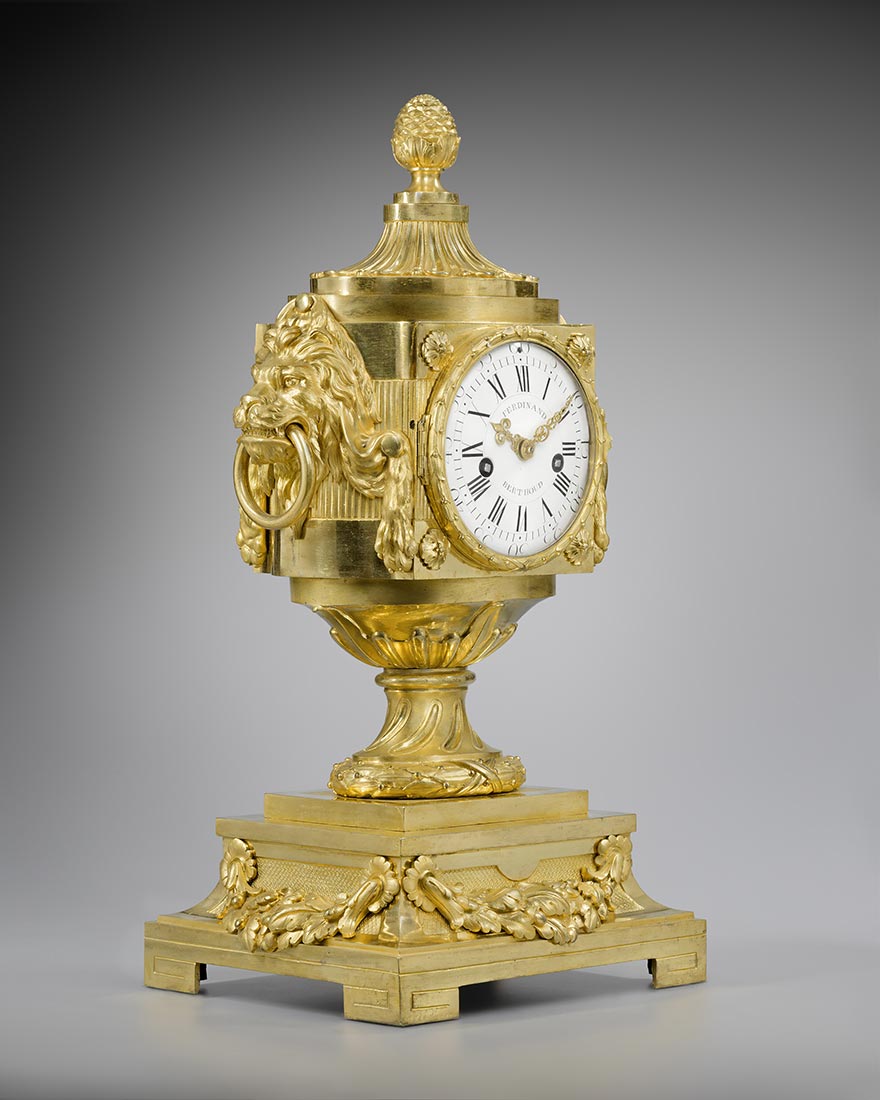
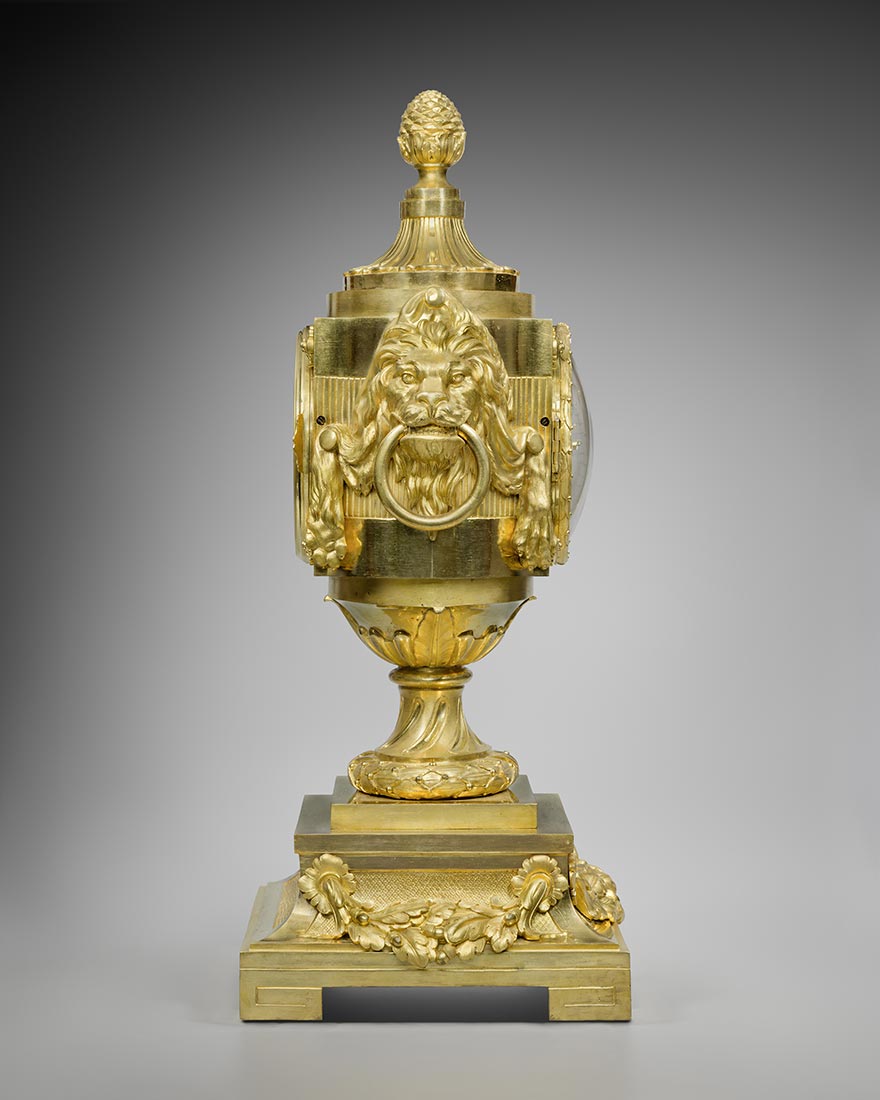
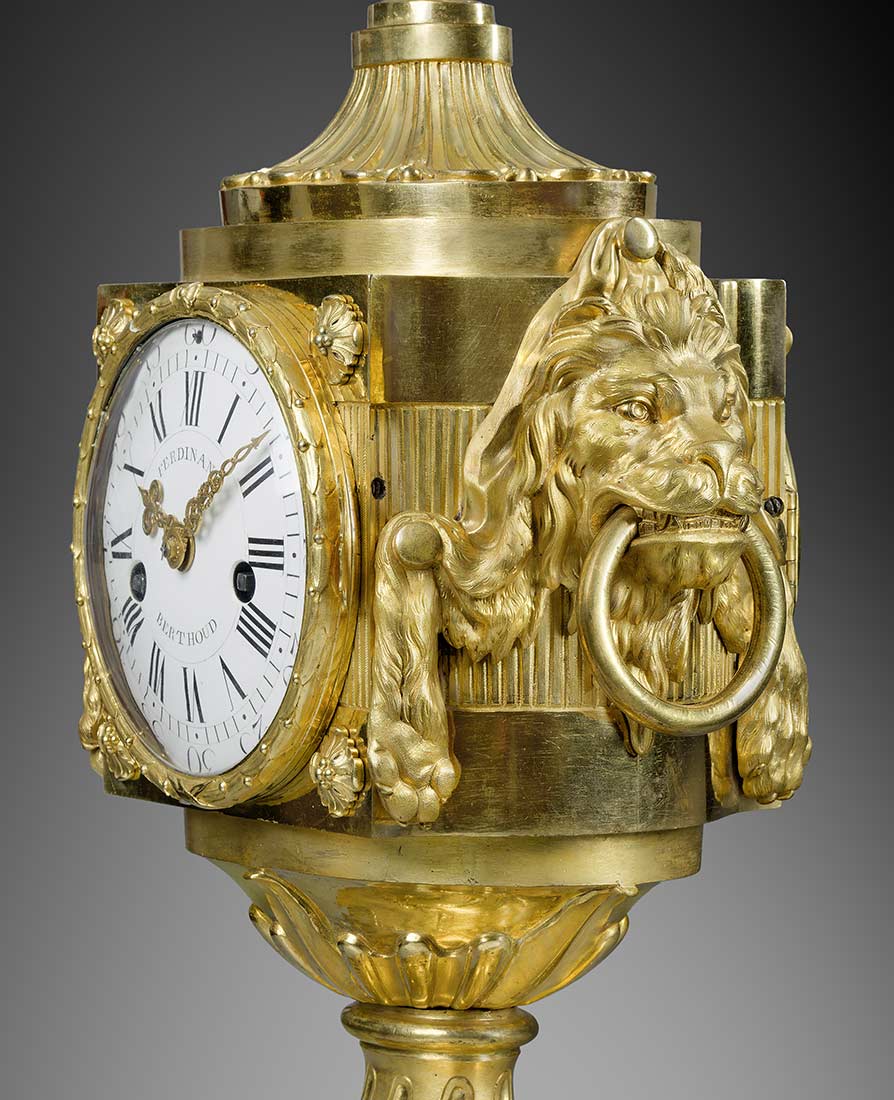
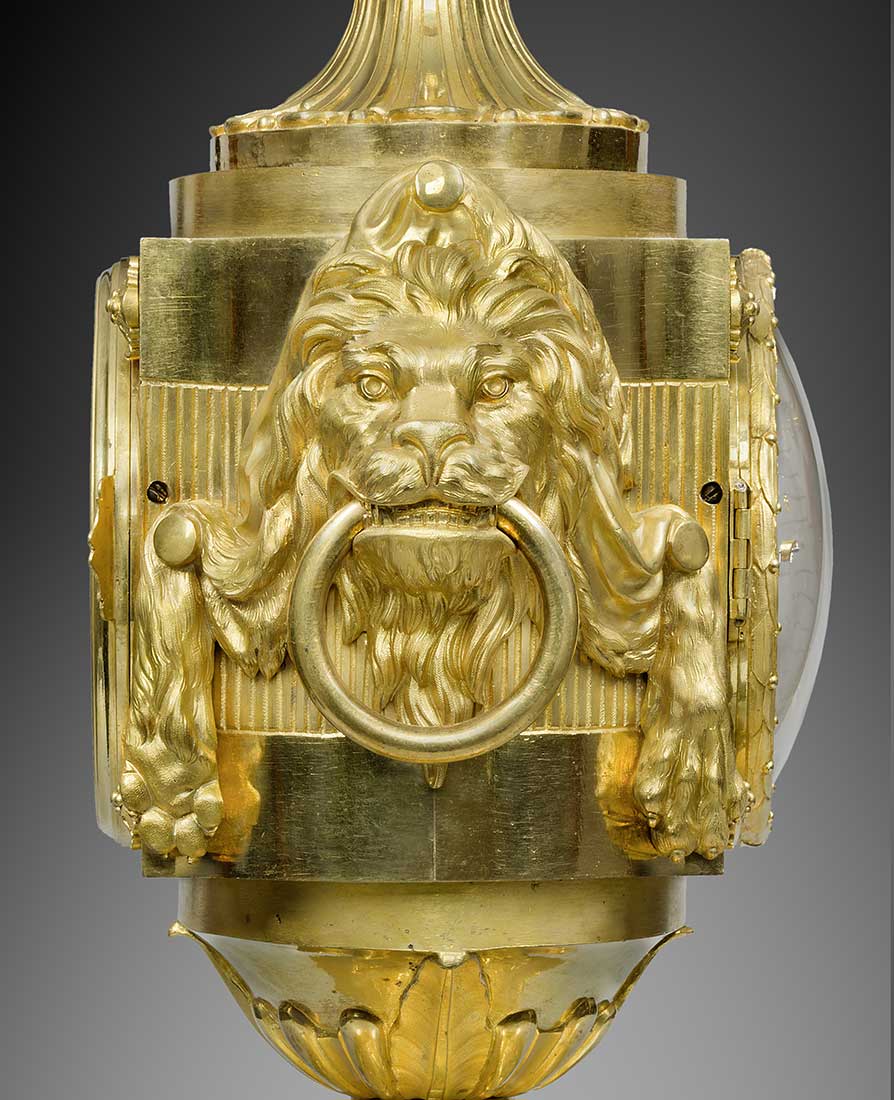
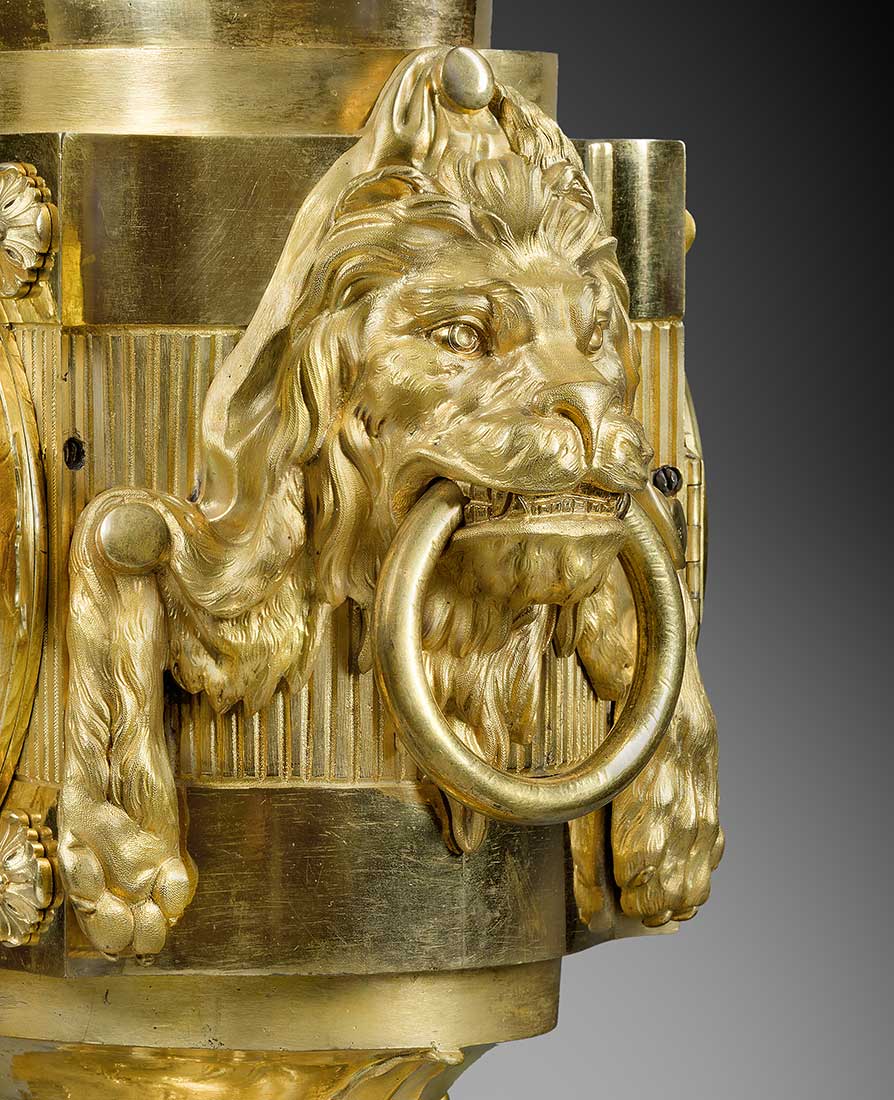
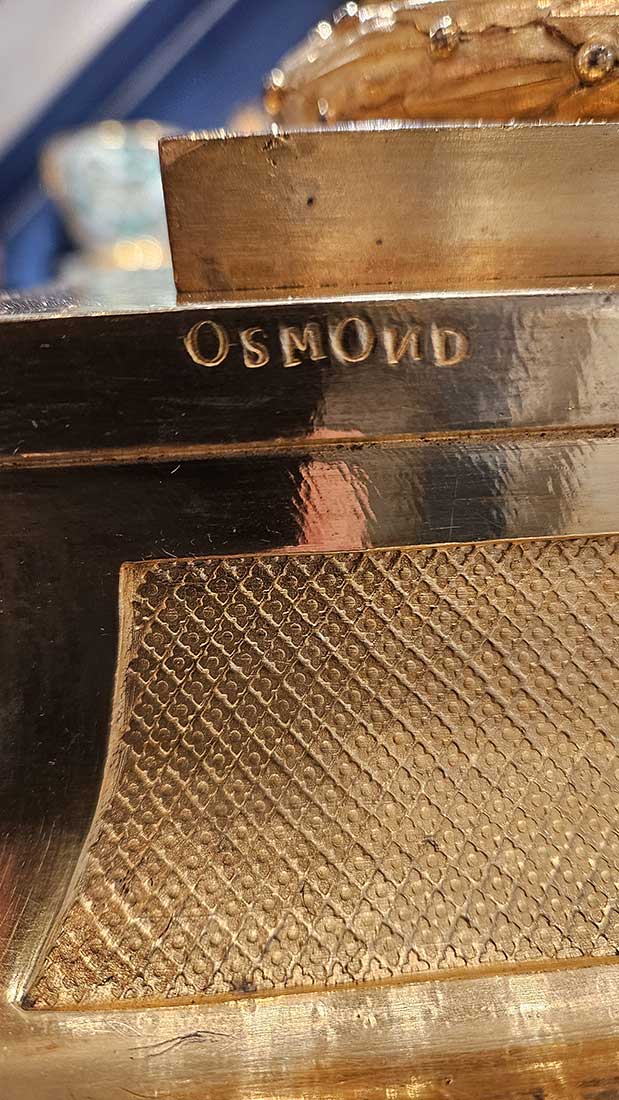
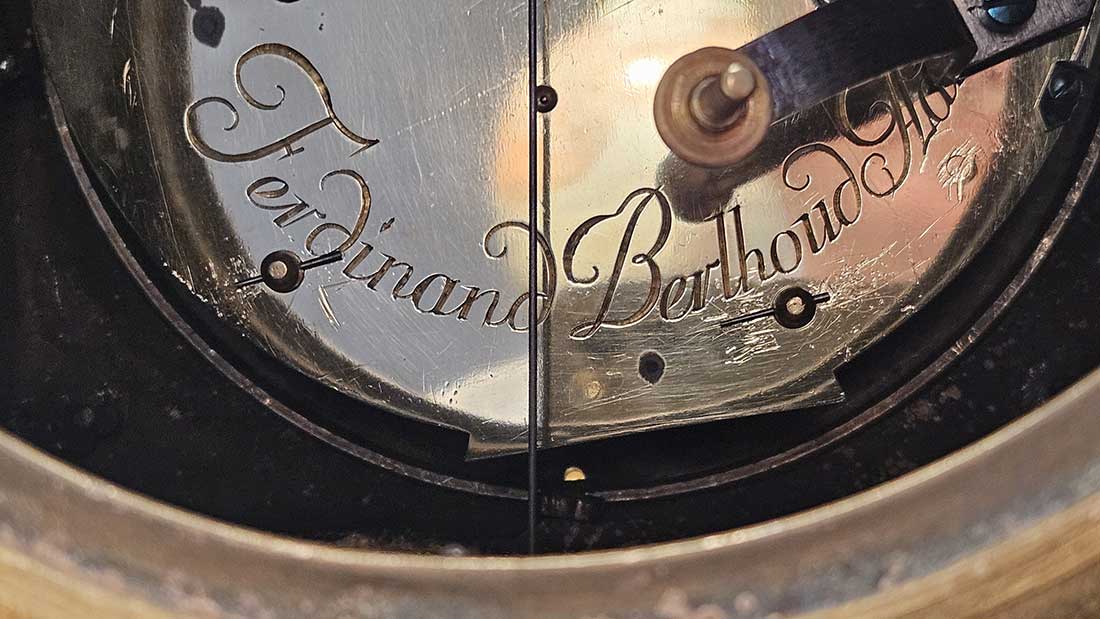
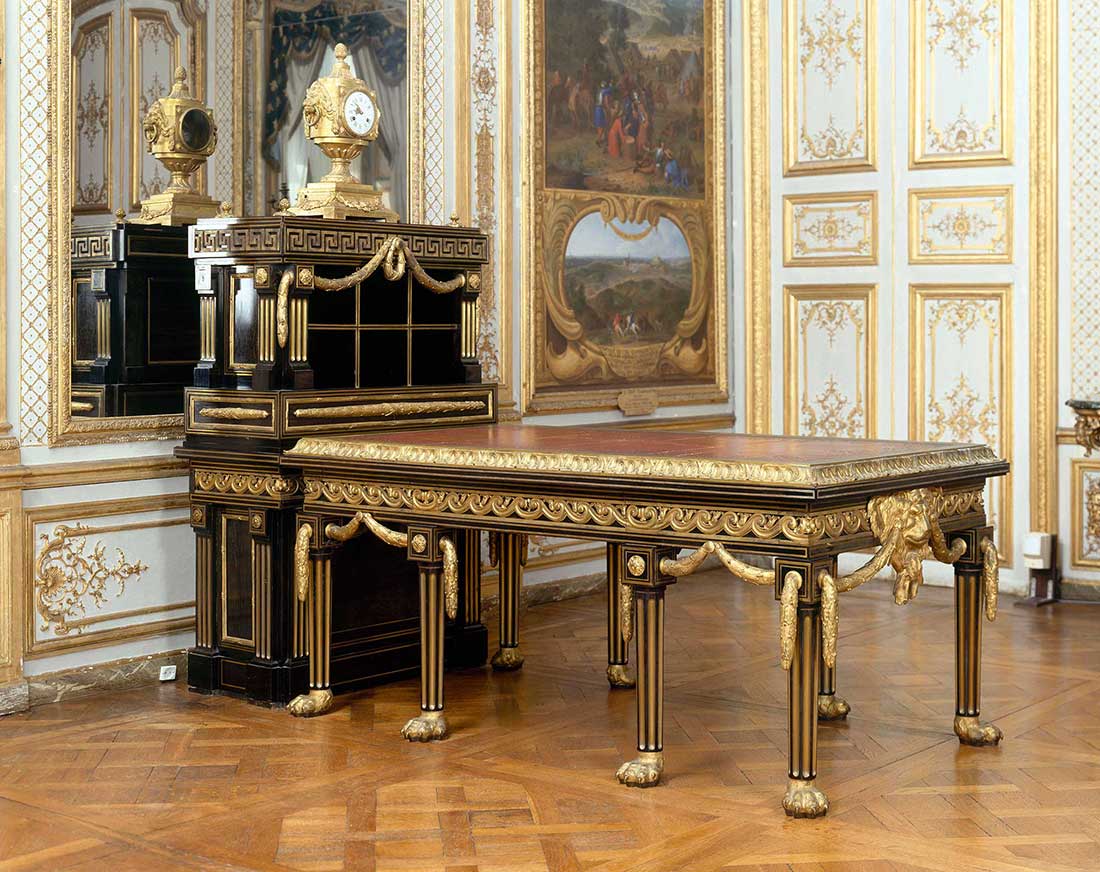
A late Louis XV gilt bronze cartonnier vase clock,
the case stamped OSMOND and the dial
and movement signed Ferdinand Berthoud à Paris, Circa 1760
Robert Osmond (1711-1789) , maitre bronzier in 1746
Ferdinand Berthoud (1727-1807), maitre horloger in 1753
Height: 23 ¾ in. (60.5 cm.) Width: 11 ¾ in. (30 cm.) Depth: 10 in. (25.5 cm.)
Provenance
Collection of Beurdeley Père, sale Me Paul Chevallier, Paris, hôtel Drouot, salle 1, 23 May 1887, lot 31
Collection of Louis Albert Marie de la Forest d’Armaillé, sale Mes Paul Chevallier & René Appert, Paris, galerie Sedelmeyer, 5-6 June 1890, lot 150
Comparative Literature
S.Eriksen, Early Neo-Classicism in France, London, 1974, pp. 143 and 344, pl. 187
H.Ottomeyer & P Proschel, Vergoldete Bronzen, vol. I, Munich, 1996, pp. 154-155
J-D Augarde, Les Ouvriers du Temps, Geneva, 1996, p. 255, fig. 200
P.Kjellberg, L’Encyclopédie de la pendule française, Paris, 1997, pp. 212-213
M-L de Rochebrunne and V. Bastien, eds. Ange Laurent de La Live de Jully (1725-1779), un grand amateur à l’époque des Lumières, Paris, 2024, pp. 326-327, fig. 228
Evolution of the Design
Designed by the famous bronzier, Robert Osmond, who stamped the case, the clock is one of the earliest examples of the neo-classical style which evolves in France in the late 1750’s. It is identical to one signed Julien Le Roy which now rests on the cartonnier of the famous desk designed by Robert Le Lorrain for Ange Laurent de La Live de Jully, the celebrated collector, now in the Musée Condé, Chateau de Chantilly. The ensemble was executed under the direction of Philippe Caffieri, another important bronzier who collaborated frequently with Osmond and is considered the very first manifestation of what was to come to be known as the gout grec style (Rochebrunne, op cit. and Eriksen, op. cit).
18th Century Collectors of the Model
In addition to the La Live de Jully example discussed above, two other noted collectors owned versions of this clock:
Louis Phélypeaux de Saint-Florentin, (1705-1777) duc de la Vrillère, minister to King Louis XV : an inventory taken on his death in 1777 records one in his bedroom of the Hotel de Saint-Florentin, Paris (now the US Consulate).
Nicolas Beaujon, (1718-1786), an important financier and collector : the inventory taken after his death in 1787 describes an example in his Paris house, the Hotel d’Evreux (now the Elysée Palace).
The model had considerable success in the following decades as an example with the dial signed by Robert Robin was acquired by the Garde Meuble de la Couronne and placed in 1788 in the apartments of Mme Thierry de Ville d’Avray, the wife of the Director, in the Hotel de la Marine in Paris. Now in the Cleveland Museum of Art (1985.11), it is illustrated in Augarde, op cit. Another later example with a dial and movement signed by Dutertre was sold at Christie’s London, 9 February 2023, lot 108.
The signature of Berthoud, the pre-eminent clock-maker of the 1750-60s, and the exceptional quality of the casting and chasing confirms that the present clock is one of the earliest versions and an important precursor of neo-classical taste in France.
Robert Osmond (1711-1789)
The bronze castor Robert Osmond was born in Canisy, near Saint-Lô; he served his apprenticeship in the workshop of Louis Regnard, a master foundryman specializing in clay and sand casting, and became a master bronze castor in Paris in 1746. He was first established on Rue des Canettes, in the parish of St. Sulpice, and from 1761 onward, on Rue de Mâcon. Robert Osmond became a juror for his guild, thereby securing some protection for his rights as a creator. In 1753, his nephew left Normandy to join him, and in 1761, the workshop moved to Rue de Mâcon. His nephew, Jean-Baptiste Osmond (1742–after 1790), was admitted as a master in 1764; after that date, he worked with his uncle; their collaboration was so close that it is difficult to distinguish between their respective contributions. Robert Osmond retired around 1775. Jean-Baptiste, who continued to run the workshop after his uncle’s departure, soon faced difficulties; he went bankrupt in 1784. His uncle Robert died in 1789.
Prolific bronze casters and engravers, the Osmonds practiced the Louis XV and Neoclassical styles with equal success. Although they produced all kinds of decorative bronzes, including andirons, sconces, and inkwells, today they are best known for their clock cases. Initially devoted to the Rococo style, by the early 1760s they adopted the new Neoclassical style, of which they soon became masters.
Ferdinand Berthoud (1727-1807)
Berthoud is considered one of the greatest clock-makers of the second half of the 18th Century. He was responsible for a number of important innovations of the day in time-keeping and navigation and worked primarily for the Crown.
His first theoretical work, an equation clock, was approved by the Academy of Sciences in 1752. Two years later, the Academy awarded him prizes for a new equation clock and an equation watch. That same year, Berthoud submitted his first findings regarding marine clocks, to the study of which he would henceforth devote himself. His first marine clock was approved in 1764. On this occasion, he was commissioned to create a pendulum clock for the King’s Council Chamber at Versailles, for which Dauthiau was responsible for maintenance. Starting in 1766, he designed all the marine clocks and watches used on the king’s ships, and beginning in 1770, in his own words, he abandoned “public work,” entrusting the management of his workshop to his nephews Henri, then Louis, who worked under their uncle’s name.
As early as 1753, he published a “letter on clockmaking” in the journal Helvétique, followed notably by the Essay on Clockmaking (1763), the Treatise on Marine Clocks (1773), On the Measurement of Time (1787), and A History of the Measurement of Time by Clocks (1802).